"Silver Should Be Exploding" - So Why Isn’t It?
Precious Metals Volatility: What the Market Is Really Signaling

A Tale of Two Metals
In recent times, markets have experienced enormous volatility—well before the latest geopolitical tensions. During this period, gold demonstrated notable stability. Silver, on the other hand, behaved very differently, with volatility increasing dramatically. That divergence is not noise—it’s a signal.
The Narrative vs. Reality
During silver’s sharp run-up, a dominant narrative took hold: we were returning to a physical market, with overwhelming demand driven by long-term supply deficits. But the sharp drawdowns—particularly in late January—exposed a very different reality.
What we’re seeing now is not just price movement, but structural stress. Silver’s volatility versus gold’s stability is a signal most are choosing to ignore.
Gold vs. Silver: Not the Same Trade
Many investors lump gold and silver together:
Inflation hedges
Monetary metals
Stores of sovereignty
But structurally, they are not the same trade.
Gold: Large, stable, held by central banks, deeply embedded in financial systems
Silver: Smaller, more volatile, heavily influenced by speculative flows and paper claims
This difference matters—especially under stress.
A Shift in the Financial System
This isn’t just about metals. It’s about a broader transition toward a new financial architecture.
We are moving from a system driven by money supply to one driven by collateral.
That changes everything.
Liquidity is no longer about how much money exists—it’s about what assets are stable enough to back credit.
Collateral Is King
In this new framework, demand alone is not enough. Assets must be:
Stable
Predictable in value
Trusted by institutions
This is where gold currently dominates—and where silver struggles.
India: A Test Case for Silver
Recent developments in India provide a glimpse of this transition.
Silver is beginning to be used as collateral to obtain credit. On the surface, this looks bullish—but the details matter:
Only physical silver (mainly jewelry) is accepted
No bars or financial silver
Strict quantity limits (e.g., 10 kg caps)
This is not full adoption. It’s controlled experimentation.
What’s happening is clear:
Silver is being tested within the collateral framework—but not yet fully trusted.
Volatility Spread: The Key Indicator
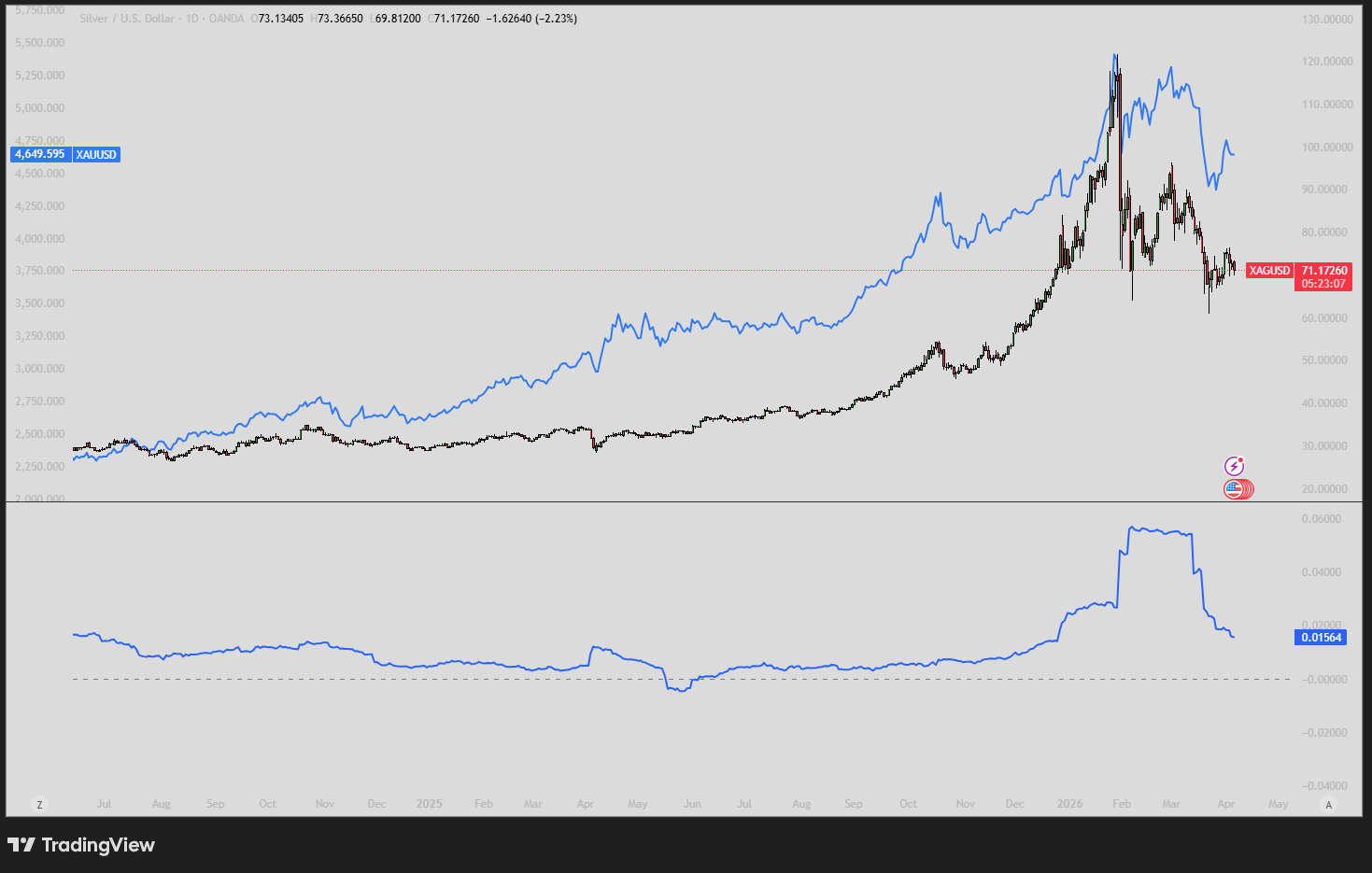
The most important metric here is the volatility spread between silver and gold.
This measures one thing:
How much more unstable silver is compared to gold.
Positive spread → Silver is more volatile → Inferior collateral
Negative spread (rare) → Silver behaves like gold → Improved eligibility
In May 2025, the spread briefly turned negative. Silver behaved like a stable asset—and shortly after, we saw a strong rally.
That’s not coincidence.
Why Stability Matters More Than Price
This isn’t about price levels. It’s about stability.
Collateral must be:
Reliable
Liquid
Predictable
Volatility introduces:
Margin risk
Balance sheet instability
Liquidity stress
That’s why gold is absorbed into the system—while silver is traded.
The Gold-Silver Ratio Adds Context
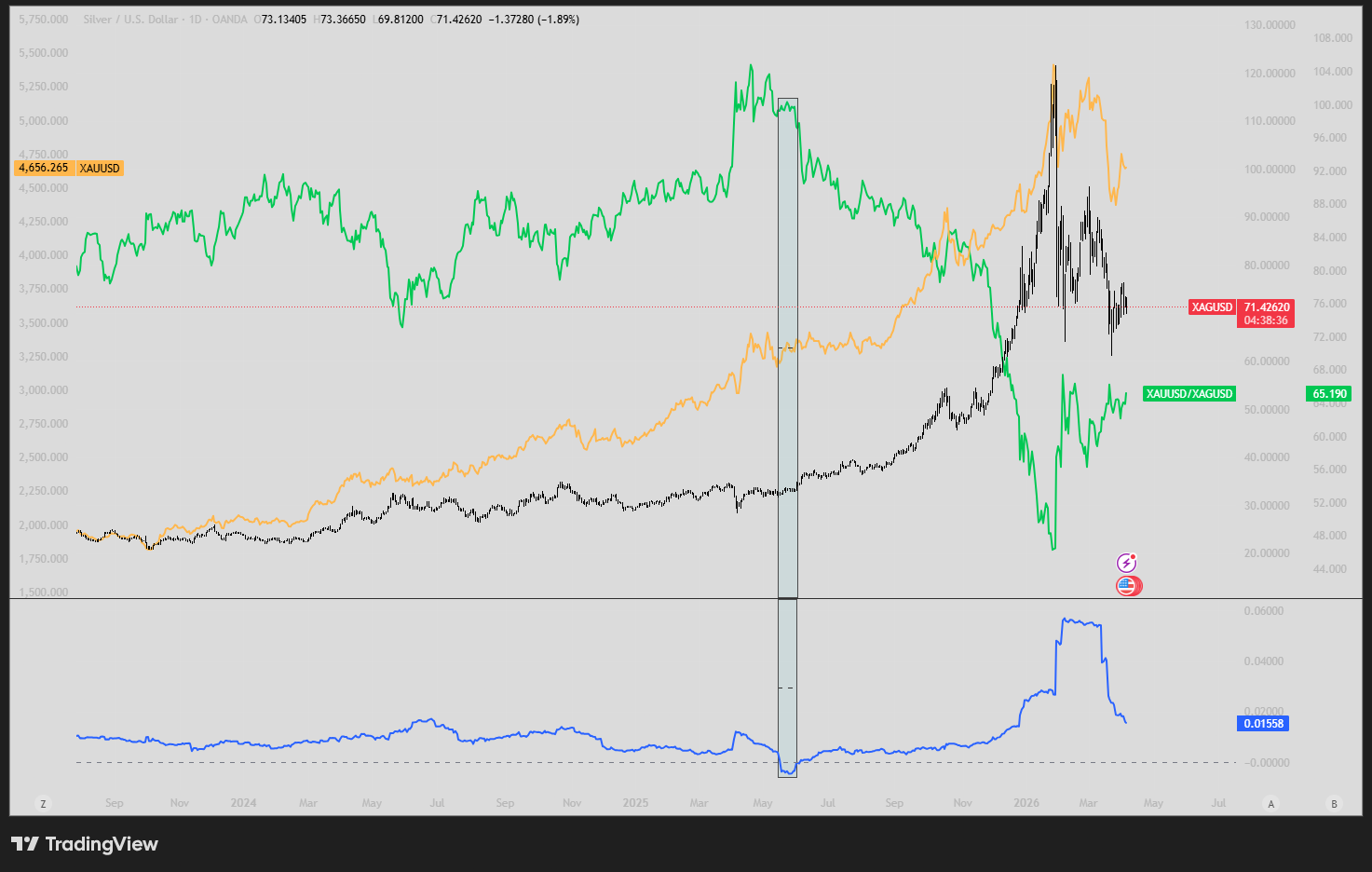
When combined with the gold-silver ratio, the picture sharpens:
High ratio + compressing volatility → Silver stabilizing → Potential structural shift
Falling ratio + rising volatility → Speculative surge → Unsustainable
For example:
When the ratio was above 100:1 and volatility compressed, silver rallied
When volatility later expanded, prices collapsed
Again, the signal is stability—not hype.
Where We Are Now
Currently:
Gold-silver ratio is rising
Volatility spread is falling
But this likely reflects a post-liquidation calm, not a structural shift yet.
The next stress event will be critical.
What to Watch
The key question:
Can silver rally without volatility expanding?
If volatility spikes again → Silver remains speculative
If volatility stays low during price moves → Silver becomes viable collateral
That’s the transition.
The Bigger Picture
We are in a collateral selection and mobilization phase.
The system is:
Expanding the pool of acceptable collateral
Doing so cautiously
Testing assets like silver incrementally
Silver doesn’t become valuable when demand rises.
It becomes valuable when it stops destabilizing balance sheets.
What a True Transition Looks Like
If silver is being fully integrated, expect:
A steadily falling gold-silver ratio (with periodic spikes)
A compressing volatility spread
Cleaner, less erratic price trends
That would signal:
Reduced derivative overhang
Increased balance sheet absorption
Transition from trading asset → collateral asset
The Alternative Scenario
If silver suddenly gains:
Full acceptance (bars, ETFs, financial instruments)
Higher loan-to-value ratios
Fewer restrictions
While volatility remains high, then the system has accepted volatility risk itself.
That would be a major shift—and a very different market regime.
Final Take
Right now, silver is not being ignored—it’s being tested.
The system is probing whether it can function as stable collateral.
Short-term: volatile
Long-term: potentially very bullish
But the key variable isn’t demand.
It’s stability.
“This is not x, this is y”
Gosh I wonder where I see that all the time.
This is an excellent explanation of your views.
Clear, succinct, believable.
This shift to >Collateral< is new to me so still getting used to seeing the world through your eyes, but useful presentations like this one really help.